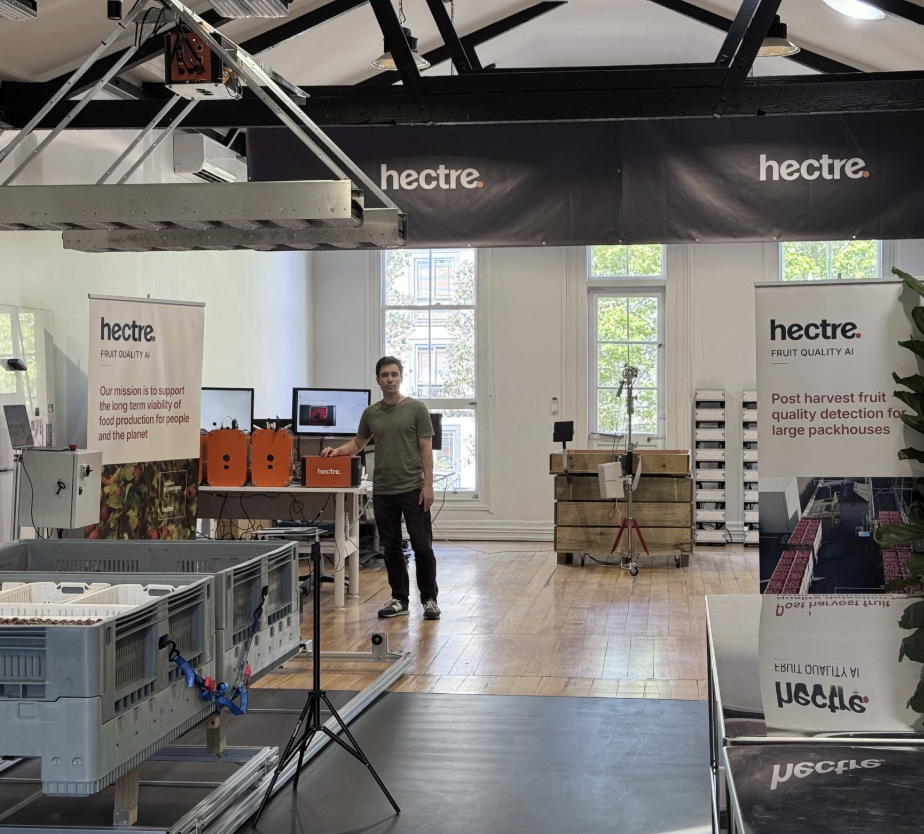
Technology being developed to see inside apples without cutting them open could deliver significant benefits for Hawke’s Bay growers, packhouses and exporters.
Foodeast Haumako chair Dr Nicky Solomon says finding innovative ways to improve productivity and get more value from what the region grows is an important part of Hawke’s Bay’s economic future.
Hawke’s Bay produces around 64 per cent of New Zealand’s apples, making improvements in fruit quality, productivity and reducing waste particularly important to the region.
A $4.6 million, three-year research programme led by New Zealand agritech company Hectre aims to develop technology that uses light to identify internal composition and assess fruit quality without damaging the fruit. Auckland-based Hectre has an established global presence, with its fruit sampling technology used in more than 22 countries worldwide.
Hectre opened its new fruit quality research laboratory in Auckland yesterday [27 Oct], where it will develop the pioneering hyperspectral technology. That came in the wake of a government announcement in August that the project has received $1.84 million from the Primary Sector Growth Fund, with Hectre contributing the balance.
The company says it expects to involve growers and packhouses in Hawke’s Bay as the research progresses. It has previously collaborated with a Hawke’s Bay grower on the development of its AI-powered fruit-sizing technology, designed to provide earlier fruit size information to support storage, packing and sales decisions.
Dr Solomon says the potential benefits extend well beyond identifying damaged fruit. “Knowing more about what’s happening inside an apple before it’s packed or shipped could help growers and exporters make better decisions about storage, packing and getting fruit to market in the best possible condition.
“For a region producing nearly two-thirds of New Zealand’s apples, even relatively small improvements in efficiency, fruit quality and reducing waste could make a real difference.
Dr Solomon says the involvement of businesses in developing and testing new technology is particularly important. “We have some very clever people developing new technology in New Zealand, but the real test is whether it solves problems businesses actually have.
“Growers and packhouse operators understand the practical challenges. They know where time and money are being lost, where better information would help, and what needs to work in a commercial environment. Having those people involved early in developing technology helps make sure the end result is something businesses can actually use.”
The importance of that approach was reinforced in a recent Helen Clark Foundation discussion paper, Growing Innovation: The next wave of AgriTech for rural New Zealand. Among its recommendations was placing experienced farmers within agritech businesses to help ensure new technology is developed with a clear understanding of the practical challenges facing the industry.
Dr Solomon says the Hectre project highlights the wider opportunities for Hawke’s Bay to get more value from the food it already produces.
“Innovation isn’t always about creating a completely new product. Sometimes it’s about improving a process, making better use of information, reducing waste or finding ways to get more value from what we’re already growing.
“Hawke’s Bay has a strong food production base, alongside businesses working in technology, research and product development. There’s real value in bringing that expertise together with the knowledge and experience of growers.
“That’s the sort of practical innovation we’re keen to encourage at Foodeast Haumako. It starts with understanding what businesses need, and helping them find the people and expertise that can make a difference.”